Search

Showing posts with label Gundam. Show all posts

Saturday, April 27, 2024

The theory of the expanded Gundam timeline and the non Gundam shows on it: or what happens when Mina Moon puts her head together with two fellow otakus

So a friend and I were talking about a Gundam manga, "Mobile Suit vs Gigantic God of Legend Gigantis' Coutnerattack", published in the magazine MS Saga in 1993, and you can read about MS Saga here in this article I wrote. That ladies and gentlemen is what we in the industry refer to as a callback, and I just made one. Alright with the plug out of the way, back on topic. So this manga is a 4 chapter manga set after the events of Gundam ZZ. In Universal Century 0090 Neo Zeon discovers the remains of an ancient robot, which matches the description of an ancient god like robot from legend that helped create and bring peace to the world. Seeing this as a divine sign, they put the heir to Zeon, Mineva Zabi in the machine as the pilot and plotted their revenge, only for the raveges of war that has plagued the universal century to stir an anger within the machine, and it begins a rampage of destruction. This event is so catastrophic it brings together the likes of Jusau Ashta, Amuro Ray and Char Aznable together to stop it. However inside while trying to save Mineva, Judau encounters the spirit of a woman: Karala Ajiba, and her baby Messiah, who tell Judau that the machine once destroyed everything and gave mankind a chance to start again. She begs him to stop and to let its rampage continue, let mankind have a clean slate, and Judau refuses, insisting that man kind must be free to make its own decisions, and he believes they won't destroy themselves. What happens next I won't spoil, However I want to talk about the significance of Karala and what she tells Judau.


Karala Ajiba is a character from Space Runaway Ideon, a series directed by Gundam creator Yoshiyuki Tomino. In this series we have humans colonizing a planet called Planet Solo. Here they discover a giant robot built by an ancient civilization. However the planet is discovered to be colonized by the humans by the observing human-like aliens called the Buff Clan, who claim ownership of the planet and once they attack the humans in a misunderstanding and they fight back, a chase begins. The giant robot is called the Ideon, and using it and an ancient alien ship built by the Ideon's creators, they discover both harness an endless energy source called the Ide capable of untold power. The Buff Clan at first refuse to let the humans escape because of their honor and to avenge their fallen comrades, then they seek the power of the Ide. Many times the Ideon is offered to them, but the Buff Clan repeatedly tells the humans they can't let them live because of what they have done. The buff clan commit manmade horrors beyond imagination resulting in some of the most incredible feats you could ever possibly a giant robot do, and then it all comes to ahead in the final battle seen in the movie "Ideon: Be Invoked". The symbol of the Buff Clan and humanity getting along is destroyed, both sides reach a point where they have nothing left, and the Ideon's pilot urges the Buff Clan's leader to end this stupid and needless battle, but he just says that he cannot let the humans live and the Ideon be in there hands, he will devote everything he has left to crushing them. Alas the conflict has no end and the result is tragic. The series eventually sees mankind being given a clean slate to start again once the dust settles.

Artwork form an Ideon model kit, I just used it because the artwork looks really nice.


The Robot in the story is very obviously the Ideon just from looking at it, and Karala is one of the main characters of Ideon, she has been shamed and disregarded by the Buff Clan, and misguided by the mistakes in this unending conflict. She says the Ideon wiped the slate clean, and will do so again. What she says implied this happened, once and potentially multiple times before, meaning multiple possible previous clean slates may have happened before the Universal Century and man kind destroyed it self each time. She says newtypes (I've explained this in other Gundam articles go read those or look it up) were the people who could understand each-other and lead humanity to a new age of peace that the Ideon wanted us all to become. Eventually the Ideon is stopped and it is never to be activated again, yet in Gundam we notice that there are multiple timelines, all coming to one point with Turn A Gundam. Turn A's explanation for all the reboot Gundam shows existing on one timeline makes sense and explain why there are so many Gundam shows with seemingly no connection to each-other.

Now Ideon is not an official season zero to Gundam or anything like that, but the manga merely presents a possible scenario and theory connecting the two shows. One day I decided to cross reference staff with Ideon and Gundam and I noticed something interesting. So Gundam creator Yoshiyuki Tomino not only directed all full length Gundam series and movies from the franchise's creation in 1979 up until 1993, but there is more overlap than you might think with him directing Ideon too. Scriptwriter for both Ideon movies and 8 episodes of the TV series, Kenichi Matsuzaki, was a scriptwriter for 12 episodes of Mobile Suit Gundam, the mobile suit Gundam compilation films and he was the lead sci-fi researcher and world builder for Mobile Suit Gundam. Matsuzaki was the mastermind behind things like space colonies and minovsky particles. I thought it was interesting that both of these distinguished gentlemen worked on the series, and then I noticed scriptwriter for 13 episodes, Sukehiro Tomita wrote 5 episodes of Victory Gundam in 1993. After that, I was asked something. Would Metal Armor Dragonar be the first clean slate offered by the Ideon? I asked for elaboration and the more we talked the more it made sense.


Metal Armor Dragonar was a show made by Ban-Dai as a back-up plan incase Gundam as a franchise ever died out after Gundam ZZ or franchise fatigue set in. New Gundam shows serving as sequels and spin offs with an existing lore made it more and more daunting to get into. It was made with the concept of being a new modern (modern by late 80s standards) reimagining of the original Gundam series, but with a new original lore and being easy to get into with no learning required as opposed to a new Gundam series. The general story is that a militant group has captured the moon as the first step in their plan of wiping out all on earth and reviving the human race as a pure mankind, and they have military superiority with their mecha called metal armors. The earth unites as the Earth Federation (sound familiar?) to repel them and three reluctant teenagers pilot the earth's first metal armors in an emergency situation to stop a fight, only for it to lead to them being dragged into the war.

Mechanical designer on this was Kunio Okawara of all people, famous as being the mechanical designer on most Gundam projects for several years up until the late 90s/2000s when he started working on Gundam less and less. Director was Takeyuki Kanda, who directed the Mobile Suit Gundam episode "The Threat of Zeon", which is one of the most famous episodes in all of the series, and written by Kenichi Matsuzaki. On top of this Kanda would later go on to write and direct an SD Gundam short film, and the first half of the Mobile Suit Gundam 08th MS Team OVA series before he would end up dying in a car crash and unable to finish 08th MS Team, character designer was Kenichi Onuki, who also did character design for both Gundam Build Fighters shows, the Gundam Seed Stargazer OVA series and he has worked as an animator on numerous Gundam shows from Zeta Gundam to present day. writing staff included 13 episodes written by Yoshitake Suzuki, who wrote 4 episodes of Gundam 0083 Stardust Memory and he wrote 12 episodes of Mobile Fighter G Gundam and was responsible for series composition for that series. Hidemi Kamata wrote 21 episodes of Dragonar, as well as 5 episodes of Gundam ZZ. 12 episodes written by Hiroyuki Hoshiyama, who wrote 11 episodes of Mobile Suit Gundam and the scripts of the compilation film trilogy alongside Kenichi Matsuzaki. 7 episodes written by Ryosuke Takahashi, who wrote 2 episodes of Mobile Suit Gundam 0083 Stardust Memory, and 5 episodes by Yasushi Harano, who wrote "The Winds of Jaburo" episode of Mobile Suit Zeta Gundam. Lastly Kenichi Matsuzaki wrote 10 episodes. All the writers worked as writers for Gundam at one point. 

So with all the staff overlap and all the intentional callbacks and references to Gundam, I thought, yes, it is possible. Then talking about this to two other friends who are huge otakus I decided we would work together and create a list of non Gundam shows that could fit into this idea of Ideon resets pre Gundam. My criteria are the following:

1. Lots of staff overlap is the main criteria, and I don't mean animators and such since anyone can be a small animator on a show and it means little, I'm talking significant and/or creative roles like writer, director, animation director on a large number of episodes, composer, design, etc only. They had to have worked on a Gundam series too, they can't work on every show mentioned here except Gundam, though working on other non Gundam shows mentioned on this list is a bonus. Bonus points for if they worked on Ideon in any capacity.

2. No significant franchises, Votoms, Macross and Patlabor are all off limits for being significant franchises themselves and I am not dead set on linking major franchises to Gundam in the name of creating a horrible disjointed mega timeline of franchises.

3. manga does not count.

4. shows that I don't think logically could line-up with Gundam and Ideon will not be included regardless of staff overlap, this goes doubly for shows based on an existing source material, so shows like Aura Battler Dunbine, Giant Gorg and Galactic Drifter Vifam are just off limits.

5. No shows pre Mobile Suit Gundam

6. The opinion of me and my two collaborators because this is my article.

With that out of the way lets begin


Fang of the Sun Dougram is first up. The series is about a group of freedom fighters called the Sun Fang Corps, who live on the frontier planet Deployer. Their governor joins with the corrupted earth federation (Hey there it is again), and becomes a complete dictator under the influence of the earth federation. these freedom fighters engage his forces in guerilla warfare using their robot Dougram. However Dougram is just a robot with nothing really special going for it, adding an extra level of tension to the fights. The show was created by Ryosuke Takahashi, and we already established what he did, and he cocreated it with Hiroyuki Hoshiyama, who served as the main writer for the series, and again we already talked about his contributions to Mobile Suit Gundam. Additional writers include Yoshitake Suzuki, whom we already talked about, and Sukehiro Tomita, whom we already talked about as a script writer for Ideon and Victory Gundam, as well as Starzinger which was a series led by Leiji Matsumoto, the absolutely GOATed manga creator who has likely had a hand in inspiring every show I'm mentioning here in this article. Masami Iwasaki produced it too, and he held a producer credit on the Mobile Suit Gundam compilation film trilogy. Takahashi directed alongside Takeyuki Kanda, another man we already talked about. Character design was done by Noeio Shioyama, who served as a key animator on Victory Gundam and Gundam F91, and the other character designer was Soji Yoshikawa, who most notably before this worked as a scriptwriter on Leiji Matsumoto's mecha anime Danguard Ace, though he hasn't actually worked on a Gundam series. Dougram not only shares all these people in common with Gundam, but it also solidified the real robot genre post Gundam as a shining example. To top it all off, the mangaka behind Gundam Thunderbolt: Yasuo Ohtagaki, for the last few years has been doing a manga adaptation of Dougram for Big Comic Superior's online branch. I know I said manga doesn't count, but I respect the hell out of Ohtagaki, so allow me to make an exception here. I think Dougram gets a really solid pass overall. Also unrelated side note, but the soundtrack is by longtime Ultraman OST composer Toru Fuyki in one of his rare anime contributions.


Combat Mecha Xabungle is a series by the legendary Yoshiyuki Tomino, so that's one base covered already. The anime centers around the world being a lawless wasteland with those with enough money and status to afford a standard of living are now known as the innocent, and living in domed cities. We follow the Sand Rats, a group of bandits just trying to survive, and among them Jiron Amos, on a quest for revenge against the outlaw who murdered his parents, using a stolen machine called Xabungle to enact his plan for revenge. Xabungle is lighthearted in tone, but great at fight scenes and the moments of drama it chooses to convey, with the machines being all functionality over form or looks. Tomino cocreated this series with Yoshitake Sazuki, who had previous collaborated with Tomino on Voltes V and Brave Raideen. Sazuki wrote 9 episodes, while 15 episodes were written by Tsunehisa Ito, Ito is most famously known as the man who cowrote Gundam F91 with Tomino. 15 episodes were cowritten by Yoshihisa Araki, who wrote 8 episodes of Mobile Suit Gundam, cowrote the film trilogy script with Hoshiyama and Matsuzaki, and was a script writing assistant on the Mobile Suit Gundam Cucuruz Doan's Island movie from 2022. Lastly 9 episodes were written by Soji Yoshikawa, who you may remember from Dougram.Character designs once again handled by Space Runaway Ideon character designer Tomonori Kogawa, which is as always, awesome. Music was handled by Kayokyoku (mainstream Japanese pop music of the 60s-80s before J-pop) music producer Koji Makaino, who cowrote opening themes for Zeta Gundam and Gundam Wing. Last but most importantly is mechanical design by Kunio Okawara. The collection of staff here, the similarities to Gundam ZZ in terms of tone and presentation, and that good old Tomino story telling complete with elements of slapstick and dark comedy make it a nice addition. Xabungle would go on to remain an influential cult classic and inspire a show readers may by more familiar with by the name of "Gurren Lagann"


Blue Comet SPT Layzner. Layzner is about human exploration into space in an alternate reality where the Cold War has carried on far into the distant future, and the reaction of aliens to human's expansion, much like Ideon, though Layzner's take on it served as an inspiration for a project of my own I've been working on. The aliens see it as justified self defense since the humans are colonizing land already claimed and owned, but the humans are just protecting themselves. It's a classic case of a misunderstanding leading to a war, just like Ideon. The machines the humans use are exploration use machines repurposed for combat, which is about as real robot as you can get in regards to mech designs. Once again a Ryosuke Takahashi created and directed series, as well as serving as writer on one episode. Cocreated this time with another recurring name Tsunehisa Ito. Ito served as head writer mapping out the overall story and served as scriptwriter for 8 episodes, with additional writers including 8 episodes written by Yoshitake Suzuzki, 10 episodes by Hiroyuki Hoshiyama and 9 episodes written Yasushi Hirano all of whom we have already covered. In addition to this we have one episode written by Meigo Endo, who wrote 22 episodes of Gundam ZZ, 18 episodes of Zeta Gundam, two episodes of Gundam 0083 Stardust Memory, and two episodes of Gundam Seed. Masuo Ueda as producer, and he has produced too many Gundam projects to mention here. Character design was handled by Moriyasu Taniguchi, who served as an animation director on 6 episodes of Victory Gundam, a key animator on one episode of Mobile Fighter G Gundam, and a key animator on Gundam Seed. He also served as animation director on 4 episodes of Space Runaway Ideon and Ideon Make Contact, He also served as key animator for 7 episodes of Space Runaway Ideon and on Ideon Be Invoked. Layzner is great and kind of seen as a well aged classic of the mecha genre and one that more than succeeds in showing the character based drama that made the real robot subgenre so good.


Heavy Metal L-Gaim is yet another series directed by Tomino, and this one is kind of contentious because Tomino supposedly undermined what was supposed to be group effort by a lot of the staff, all in order to bring his vision to life, and some people, were not happy about it. The story is about Daba Myroad from the star system of Pentagona. Daba rises up to stop the threat of Posiedal, who want to conquer and enforce their rule across Pentagona. So Daba leads a resistance against them consisting of an interesting cast of characters he recruits throughout his journey, including an actual small fairy. Like Xabungle, the designs here are all functionality over form and looks, and quite nice designs for what they are. Said mechanical designs and the character designs too, were by then unknown designer Mamoru Nagano, who would later work as a mechanical designer on Zeta Gundam, and illustrator of the original prints of the Zeta Gundam novelizations. The man responsible for series composition and serving as head writer is Yuji Watanabe, who, while having never worked on Gundam, did write the scripts for 13 episodes of Ideon, as well as both compilation films. Among other writers We have 14 written by Sukehiro Tomita, whom we already covered, and 5 episodes written by Hiroshi Ohnogi. Ohnogi wrote two of the Gundam MS Igloo OVAs, 6 episodes of Zeta Gundam, 7 episodes of Gundam Seed, and 11 episodes of Gundam Seed Destiny. In addition to this, he is the writer of the Mobile Suit Gundam the Battle Tales of Flannigan Boone manga. Art direction was handled by Shigemi Ikeda, who has done the art direction on way too many Gundam projects to mention, as well as popular modern seasonal anime like My Hero Academia and One Punch Man. A big portion of the animation direction was by Hiroyuki Kitazume, who, in addition to animation direction for most 80s Gundam projects, served as character designer on Gundam ZZ and Char's Counterattack, as well as writer of 2 long running Gundam manga series. Music is by Kei Wakakusa, who cowrote "Silent Voice" and "Issen-Man" from Gundam ZZ, as well as cowriter of the theme music to Blue Comet SPT Layzner. With these connections and this being yet another Tomino series and featuring his signature brand of story telling, I think it is more than acceptable to list here among the other shows. The use of light fantasy elements too also contribute to a very unique addition and make L-Gaim one of Tomino's most well regarded non Gundam works.

I have more I want to bring up, but ultimately I've decided to hold those off for a part 2. Because I'd like to hear suggestions from other people. The first post on my blog has my Discord name on it, you can reach reach me there and leave some suggestions, or comment here if you have a Blogspot account.

Saturday, December 30, 2023

The history of Gundam Ace and the Magazines That Came Before: or how Ban-Dai somehow screwed up 3 separate magazines and needed to be coerced into making a Gundam magazine

Happy new year. I hope you enjoyed your year, as much as I did mine. I welcomed a new addition to the family, met my father after years of believing he was dead, got to take my job in music further than ever before, and I've gotten to start this blog, so the year has been special for me. To commemorate the year I started this blog, here is one last article to close out the year, after months of repeated delays and false promises of new articles getting released.

So after writing my "how to watch Gundam" article I've been inspired to reread Origin. When I finished Origin I thought "wow that was great I should read more" and so I chose to read not just Origin but all the Gundam manga in the Universal Century I could. Then during some research I did for some of my articles I wrote previously on Gundam, a friend who helped me with said research found some things on Gundam Ace and its founding. I started this article in late September with the goal of publishing it on the 30th, before a huge work opportunity dragged me away followed by family stuff. I didn't leave the blog devoid of content, as throughout September and October I updated all the previous Gundam articles (except that bad Zeta New Translation slander piece I wrote while sleep deprived and that first article reviewing Unicorn, Narrative and Twilight Axis) to feature more accurate information, some minor spelling corrections and some new points I felt that should have been there in the first place or decided would make the article better with the benefit of hindsight. Seriously I keep starting new articles and then get so caught up with editing/fixing/adding to old articles that my old ones keep getting updates while I keep struggling to get out new ones. With things having calmed down, I finally found the time to finish it and rewrite many parts of it. So, here it is 3+ months later than I wanted.


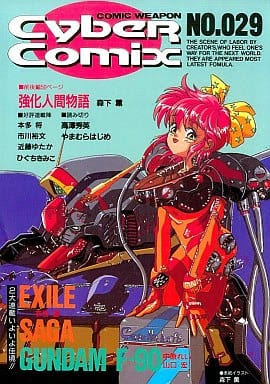
For those unaware the history of Gundam manga and such starts with small steps, those being manga adaptations of Gundam shows from the late seventies and throughout the eighties. Then later "Record of MS Wars", "Mobile Suit Gundam Revival of Zeon" and other minor manga and one offs. These were published in other magazines. This was until the late 80s when Ban-Dai established their own Cyber Comix magazine. This was a serialized magazine by Ban-Dai that specialized in mecha comics, related articles and so on and so forth. Some of the earliest Gundam manga were featured here. Some of these early Gundam manga were actually really neat stories like "Under the Gundam: Double Fake", some of these are still looked back on fondly and influencing the media made in UC today with things such as "Gudnam F90", some are really cool but dated now by the simple fact that the Universal Century has become more concrete and thought out over the years as more people have decided on lore for it, added to said lore and a lot of the principals of its technology. Such as "The Story of Dr Minovsky" and "Outer Gundam", which are both interesting reads, with "Outer Gundam" being one of the first proper Gundam AUs with multiple entries. However they're are no longer accurate at all due to their explanations on the history of the Universal Century as well how the technology works having been dated and made any possibility of these being canon absolutely thrown out the window. For example some of these say the UC started after the moon landing, or after the challenger incident, when it was later established that colony construction likely began in the around 2040s (or later, I could be wrong). Others were just weird. Some of these weird ones like "Cyber Newtype Story: Another Z Gundam Story" are great stories that can be enjoyed by anyone, others like "Gundam Saigon" (think Cocaine Bear meets Gundam, and I am not joking at all when I say that) are just bizarre in a fascinating way. While including original grassroots series and tie ins to established ones like "Armored Troops Votoms", the magazine became increasingly Gundam dominated and would leave less and less room for the rest of the stuff in the magazine. This and other factors, most notably a new deal offered to them by the newly formed Mediaworks company formed by the former VP of Kadokawa, would culminate in the decision to terminate Cyber Comix and replace it. Following Cyber Comix's dissolution it was replaced by two magazines, the first being Media Comix Dyne. This Magazine did not get the audience of Cyber Comix out of the gate and was cancelled due to middling sales after few volumes. This would lead to it being replaced by Dengeki Daioh, a general manga and anime magazine covering a wide variety of franchises and series, which is still being published today. The second magazine replacing Cyber Comix was MS Saga, a magazine dedicated entirely to Gundam, which came after the swift end of Media Comix Dyne. The flagship series for this was a manga adaptation of the firs Gundam anime, drawn by veteran Gundam mangaka Kazuhisa Kondo. However MS Saga was not the best idea since Gundam was seeing a decline in popularity at the time in comparison to the 80s. (one that would soon turn around when "Gundam Wing" came out in the mid 90s) MS Saga didn't last, even after serializing sequels to some of Cyber Comix's stories.


Following the cancellation of MS Saga after only a dozen or so volumes, Gundam would require other comic magazines to publish manga, leading to a decline in Gundam manga. Remaining in progress Gundam manga were transferred to Bandai's B-Club magazine, Kondo's 0079 manga was transferred to Dengeki Daioh. However things would change with the success of two comics in particular. The first major Gundam side story told outside the medium of animation was "Blue Destiny", a video game trilogy released on Sega's hugely popular Sega Saturn console. It had a novelization and a corresponding single volume comic serialized in Comic Bon Bon, which proved a decent enough success. The other of these two manga was "Crossbone Gundam". "Crossbone Gundam" was a sequel to the Gundam F91 film. Originally a draft and outline by Tomino for a sequel, but abandoned. Yuichi Hasegawa, who had worked on Gundam manga before, was brought on to adapt it as a manga, to which he agreed on the condition that he could change the draft as he saw fit, and create his own character to center the story around. The resulting series was serialized in Shonen Ace, a manga magazine by Kadokawa focused on anime tie ins and manga with a less broad appeal, where the manga would be hugely successful. It ran for a long time and got 6 volumes. The huge success of this series would lead to the start of a close relationship between Kadokawa and Gundam. Kadokawa had already named their massively popular entertainment magazine "Newtype" after a term frequently used in Gundam's Universal Century.

I can't be the only one thinking MS Saga's covers have no personality in comparison to Cyber Comix

Back in the early 2000s "Gundam Wing", the show that revived interest in Gundam by giving it a new audience (the series that was infamously was aimed towards the shoujo demographic) was dubbed in English and aired on Toonami. The series was a success in the west, leading to them next doing "Mobile Fighter G Gundam" and then seeking to do "Turn A Gundam" and "After War Gundam X". However Sunrise refused and insisted that the original "Mobile Suit Gundam", a show of great historical significance in Japan, be brought over. Eventually Toonami relented and dubbed it, airing it on TV. It went well until a certain event happened in autumn 2001 that made programs like Gundam undesirable on TV. It was during this big push in the states during the late 90s and early 2000s that Sunrise asked "Mobile Suit Gundam" character designer Yoshikazu Yasuhiko to write a manga version of that series specifically for the western market. Yas declined this offer. He always thought Gundam was Tomino's work, and starting with Zeta, his own ideas were left by the wayside, and he felt dissatisfied with the direction of the franchise and its focus on newtypes, not to mention he wasn't happy during the production process of "Zeta Gundam". However during a hospitalization he began drawing scenes from "Mobile Suit Gundam" to pass time. Drawing scenes like Garma's last stand made him realize just how attached he was to Gundam. Eventually he decided maybe retelling that show's story as a manga could be interesting. After some support and encouragement from other people, including Tomino himself, Yas gave in and agreed to do it.

Now there was a couple things. First of all was that a manga retelling of "Mobile Suit Gundam" was already a thing. In 1993 "Mobile Suit Gundam 0079", a manga retelling of "Mobile Suit Gundam" written and illustrated by Kazuhisa Kondo was serialized. As we talked about, it changed magazines a few times before ending up in Dengeki Daioh, a magazine published by a subsidiary of Kadokawa. At the time this manga was still on going, and it was still going up until 2005 when it ended. Second, Yas had a specific way he wanted the comic released. He had in mind 100 pages before Amuro ever reached the Gundam, and to highlight important scenes with beautiful full watercolor illustrations. However this presented a problem as the publisher Sunrise had in mind was Kadokawa. Kadokawa couldn't put a comic like that in any of their existing magazines, and the magazine succeeding Cyber Comix and MS Saga: Dengeki Daioh, already had a manga remake of "Mobile Suit Gundam" in serialization. So Kadokawa's solution was to make a magazine focused exclusively on Gundam, thus Kadokawa launched Gundam Ace for the sole purpose of releasing this new manga retelling of "Mobile Suit Gundam" as Yas intended. Unlike MS Saga everything was right for this magazine. It was published by Kadokawa, a huge magazine publisher since the 80s, and Gundam at the time was on the cusp of "Gundam Seed", a show that love it or hate it brought Gundam to a whole new generation of fans and became one of the most popular works in the franchise's history. On top of this, it's flagship series was going to be by Yas, who was not only one of the Gundam cocreators commonly credited as Hajime Yatate, but in the years since he quit Gundam he had become a mangaka of significant acclaim and noteriety. However this was not enough


Gundam Ace launched with "Gundam the Origin" front and center and as its premier title. Kadokawa Shoten's president was the one who made the push for Gundam the Origin getting its own magazine, but many higher ups in the company feared that a regular magazine dedicated to just one franchise would be unsustainable, and I'm sure MS Saga's failure was something that justified these fears. A heavy hitter like Origin would not be enough to carry a regular magazine alone. So they went about negotiating with mangaka and other people involved in Gundam to contribute columns, articles, interviews, and other manga series, all in hopes of filling out a regular magazine. Because of this, Gundam Ace became more than just a shounen magazine, but something of a general Gundam magazine, with manga at the forefront.

The second heavy hitting manga to help push Gundam Ace was "Char's Deleted Affair". Kadokawa saw the potential in a manga remake of Zeta much like Origin, and wanted Gundam Ace to debut with manga retellings of both 0079 and Zeta. For this they approached Hiroyuki Kitazume. Kitazume was an animation director on Zeta Gundam, and he had a host of other jobs while making Zeta too, and he took on even more duties while working on ZZ and Char's Counterattack. After Gundam, the cancellation of the Space Battleship Yamato sequel he was heavily involved in, and the failure of his own projects, he had been left as an animation director and key animator on shows like "Ah! My Goddess" and "Dragonball", with nobody giving him a chance as a creaitive. When Kadokawa approached him he declined, not seeing a point to remaking Zeta nor a need to, since he felt Zeta was great as is and unlike "Mobile Suit Gundam", it didn't need any major fixing. In addition to this, he had never taken any time to make big manga series like Yas did, so he didn't feel like it was right. However he would warm up to the idea of making manga when he got to thinking about the transition from Mobile Suit Gundam to Zeta Gundam. We never saw what happened to Char in that time or his past with Haman, and Operation Stardust wasn't even an idea anyone had during the time frame when Zeta was made. So he ended up writing for Gundam Ace a manga bridging the gap between the two, starting during the final episode of Mobile Suit Gundam, and ending right before the first episode of Zeta Gundam. This manga would be the other heavy hitting title in Gundam Ace's debut issue. The third big title in Gundam Ace's debut would be the officially licensed print serialization of the Gundam San parody web comic.

The plan was for the magazine to be released quarterly, then after serializing more manga series and adding more to it they would release it bimonthly, then later monthly if the demand was high enough. In the September issue in 2002 they added the Gundam Seed side story "Seed Astray", and "Crossbone Gundam Skull Heart". They had approached Hasegawa with the idea of a Crossbone sequel rushed out to help sell Gundam Ace, and while he didn't have an ideas for a worthy sequel, he instead made "Skull Heart", an anthology series showing different characters in the aftermath of the original "Crossbone Gundam" manga's events. In the winter issue they had legendary anime character designer Haruhiko Mikimoto write his own Zeta side story "Ecole du Ciel", detailing a Zeon immigrant's time in a Federation pilot academy and watching the rise of the Titans. They also had "Tony Takezaki presents Gundam Manga", yet another parody manga. Over time the magazine got even more comics in regular serialization and was eventually able to move to the fabled monthly release schedule, where it has remained since. 


Not every Gundam manga is serialized in Gundam Ace. Thunderbolt is published in Big Comic Superior, Rust Horizon is published in Grand Jump Mucha, Battle Tales of Flannagan Boone is published in Hero's Inc, Aggressor is published in Shounen Sunday Super, etc. However Gundam Ace has become the premier place for Gundam manga. They give mangaka great creative control (usually), and celebrate many of their own grassroots kind of series such as "Return of Johnny Ridden", "Crossbone" and "Char's Deleted Affair". The manga really has this isolated feeling compared to other shounen/seinen magazines, but it really helps make it feel special and distinct. Being centered around one franchise allows it to be more diverse than most shounen magazines by featuring several detailed non manga related topics and columns, As well as some seinen manga occaisionally published in it too. Being so laser focused on one franchise with everything inside it allows for a real sense of community with its readers, knowing most of them like the same thing. I know people who are subscribed to shounen jump to just read the 3 or 4 series they like and then just leave it on their bookshelf. With Gundam Ace, if you picked it up you are probably a Gundam fan, and so everything there is from a franchise you like. The stuff in the different timelines and such help add variety, and they've found new ways to keep it fresh with unique takes on adapting the franchise to other genres, such as the currently publishing manga about Haman Karn living in our world as an overworked head of a fashion company. Gundam Ace has something for all Gundam fans, and it really feels special. I believe it is one of the best currently printing manga magazines in Japan right now, and I'm glad to keep getting such great titles from it.

Before I end the article, I want to give my thanks to a YouTuber named Cheems. He's a very nice guy and has been a good friend. I told him of my plans to write this article and shared with him parts of a rough draft of it. It inspired him to make a video on the subject, and he was nice enough to thank me and shoutout this blog in his video. Please check out his video, as it presents this subject more concisely, entertainingly and professionally than I could hope to. Subscribe to him if you want some solid informative and entertaining anime (mostly mecha) videos. With that out of the way, thank you for reading, and have a happy new year.

Saturday, July 15, 2023

How to Gundam or a guide to getting into Japan's sci-fi juggernaut

 PC power problem fixed, kind of... point is I'm back. I'm working on a side project voted on by my blog's readers, which will be posted here on a slower week. I instead had a burst of inspiration and decided to dedicate the next article to this as a lead in to my review of Turn A Gundam which will be another article I get to in the not too distant future. In all my life I have been told twice one of the most difficult things I've ever had to answer. "You're so passionate about Gudam it makes me want to get into it, where should I start?". The question that fills me with so much happiness for a few seconds before I am overcome with dread and anxiety and soon cursing myself for not having an answer, as well as worrying I am being seen more and more as one of those insufferable people who makes one or two things they like their entire personality. The reason I've never had an answer? The franchise is big, enough said. That's a gross oversimplification, but it is the main reason. It's a huge franchise spanning 40 years, so I wanted to sit myself down and force myself to answer the question, which I will finally answer here and now. Also I recommend listening to the original version of "Ai Senshi" while reading this.


I've gone over the franchise's history before, but I will do it once more for those who haven't read any of my other Gundam articles, this time in more detail to explain some of my points regarding the various series and it's place in this question. This will help lead me into where to start and how you should approach it. Yoshiyuki Tomino, a writer on the original Astroboy/Mighty Atom anime series, had his directorial debut with an anime adaptation of Osamu Tezuka's (Tezuka is the Japanese Walt Disney and his works have been plagiarized by Disney) Triton of the Sea manga. He would become more involved in the mecha scene during the mid seventies in directing the first half of "Brave Raideen", which would really kickstart his working relationship with Sunrise, and then he would produce "Super Electromagnetic Machine Voltes V", part of a trilogy of shows by the other "Brave Raideen" director: Tadao Nagahama. This trilogy was revolutionary for adding human drama and a level of seriousness and darkness to the Super Robot Genre. Tomino himself would run with this for his own shows Sunrise let him create including "Invincible Super Man Zambot 3" and "Invincible Steel Man Daiturn 3", huge successes over seas, but moderate successes at best in Japan. His next series tried to be a grounded and gritty war series, trying to reason the so called "giant robots" as not the righteous answer to some menace, but big metal war machines used in grunt warfare. He asked mechanical designer Kunio Okawara to make more realistic, practical and compact designs in contrast to the "super robots" of mecha shows at the time, and created the revolutionary "Mobile Suit Gundam" with Yoshikazu Yasuhiko, (Most of the art in this article is his) the character designer of several super robot shows like "Comabattler V" (predecessor to "Voltes V") and "Zambot 3" as well as creating his own series years before.


"Mobile Suit Gundam" flopped and was cancelled because it was too different from what people were used to. A serious character driven series that is slow and takes its time to get to the action was just weird, especially when Tomino wanted viewers to take away their own message from the series. However toy sales were through the roof and because money talks, the remaining episodes were aired and the show did exceedingly well in reruns, creating the "real robot" genre,  a genre that would become home to many more famous works in the future such as "Neon Genesis Evangellion", "Full Metal Panic", "Code Geass" and so many more. Following the sudden surge in popularity Tomino would compile the series into three movies with newly added footage, and then go on to make many other mecha shows like "Aura Battler Dunbine", "Heavy Metal L-Gaim", "Combat Mecha Xabungle", and arguably his most important non Gundam work "Space Runaway Ideon", a show Evangellion's creator skipped his first day of collage for just so he could watch its premier. Tomino was eventually convinced to make a sequel series: "Mobile Suit Zeta Gundam", thusly franchising Gundam and further cementing it as Japan's premier sci-fi series. He would keep working on the series as a franchise until quitting in 1993, and leaving the franchise behind after Sunrise kept asking him to soft reboot the franchise for the sake of attracting a new audience that never came until after they hard rebooted it many times without him. Since then Sunrise has made several stand alone Gundam shows and Tomino has returned to the franchise a couple times, and that leads us back around to the question that started this article to begin with... "Where do you start with Gundam?"

Now the first and most obvious thing is to approach the franchise's original timeline: The Universal Century, chronologically. I am a weird person, and I like "Mobile Suit Gundam" a lot. A rag tag group of teens having to take up arms to stop the tyranny of Zeon while being pursued by the legendary Char Aznable, one of the most famous anime characters ever. It is an interesting series, but it is weird. However I will tell you right now that everyone who says to get into this franchise you must tackle it chronologically and start with that show is wrong. Yasuhiko was overworked half to death making that show and he was hospitalized working on it. The show's production was even more hellish without him, and what was supposed to be 52 episodes was cut to 39 and they had to fight to get it up to 43. It is seen as a turning point in animation over in Japan, however it does NOT hold up as well as I wish it did. I low key hate the way modern anime looks, so the art style of this show appeals to me, but I know it will probably scare off viewers who hate the way old animation looks for no good reason. Also the pacing is off. I am kind of glad it didn't reach 52 episodes, because barring some hardly explored backstory for some characters that is set up multiple times for a further explanation that never comes, the show seems to want to dedicate some episodes to just filler stuff. Some of these like the episode where Amuro disables a bunch of bombs on his Gundam are actually surprisingly interesting, while some like the episode where they look for salt is kind of worthless barring a nice interaction or two. Some say watch the compilation films, because they are considered the canon way to watch the series, but I will tell you no. Because you miss so much notable stuff, like Ramba Ral, A lot of Matilda's interactions with the Whitebase crew that really built up to one of Amuro's most pivotal character growth moments in the series, and more. So how should you approach this?


Ladies and gentlemen you may remember when I mentioned Yoshikazu Yasuhiko being hospitalized through overworking on "Mobile Suit Gundam". Well afterwards he kind of laid low in regards to animation. He did his own mecha series: "Giant Gorg" in 1984, as well as directing the anime adaptation of "Kaze to Ki no Uta", but he mostly focused on manga. He did return to the franchise do character design on Zeta Gundam and Gundam F91. However his focus was almost exclusively on manga, with "Venus Wars" being a big success for him and he even made an anime film adaptation. While all that is great, especially "Venus Wars", his definitive work came after the turn of the century. Sunrise approached him with the offer to retell "Mobile Suit Gundam" in manga form as an anniversary project.. Yasuhiko being a major creative force on that series and his hospitalization hurting the production greatly, he felt like he was responsible for it and after a lot of time sitting on the idea, he decided this this manga would be his chance to make things better. After a lot of time thinking about it he accepted the offer. He said he wanted to published a hundred pages at a time and with water color so they created the Gundam exclusive magazine "Gundam Ace" to publish his manga the way he wanted and to show his beautiful water color lustrations as he intended. This manga adaptation: "Mobile Suit Gundam: The Origin" is the definitive way to experience that series. The action looks great, the illustrations are amazing, and you can tell so much more in a book format than you can a TV series or movie. The manga not only shows an ideal version of "Mobile Suit Gundam" not hindered by production woes, but also makes many creative changes for the better, like having Sleggar Law join the crew much earlier, or multiple volumes dedicated to showing us just what lead to this war and how many of our important characters got to where they are. You might think this backstory is trivial, but no, I assure you it goes a very long way and is executed and told masterfully. If you're worried about the changes to the series made in adapting it to manga making this it's own timeline disconnected from the canon, I must tell you that it doesn't matter. Hardly any of the changes made have any impact on future events of the series. So you can comfortably read this and then go to the "Zeta Gundam" anime series or "Stardust Memory", a 14 episode anime OVA showing the events leading up to Zeta. Following you reading Origin you could do many things.

So I mentioned going directly in chronological order with the anime stuff after reading Origin, which is what I recommend, however let's assume you want to keep reading because reading is awesome. Let me tell you about Hiroyuki Kitazume. Kitazume got his start as an animation director for Tomino's works "Aura Battler Dunbine" and "Heavy Metal L-Gaim", then doing character design on "Super Dimension Cavalry Southern Cross". He was the animation director on Zeta Gundam and like Yasuhiko before him felt the strains of a rough production, though not nearly to the same extent, as a lot of the hardships there originated from Tomino himself and the intense depression he got into while making Zeta. Kitazume did all that again making Zeta's sequel series "Gundam ZZ", now doing character design in place of Yasuhiko as well as the film "Mobile Suit Gundam Char's Counterattack", where he had the same job. He would fall out of relevance following two of his own OVAs "Moldiver" and "Genesis Survivor Gaiarth", and "Yamato 2520" getting cancelled in the midst of a lawsuit. So he stopped doing big jobs and resigned himself to key animation on things like "Dragonball Z" and "Ah! My Goddess" until the 2000s when he was offered his own Gundam manga despite never working on manga before. Kitazume made "Char's Deleted Affair", a follow up to "Mobile Suit Gundam" where that show's main antagonist Char Aznable is hiding out with most of Zeon's remaining forces after the explosive final battle of Mobile Suit Gundam. It gives backstory to a lot of what changed him and happened with him before Zeta, which is nice because there are many scenes where there is implied history with him and other characters and things that we just don't learn more of in that series or ZZ. From here you could go chronologically when you are finished, and go right to the "Stardust Memory", or... maybe you want to keep reading because reading is awesome. The OVA taking place between "Mobile Suit Gundam 0083" and "Zeta Gundam" would get remade in manga form with that OVA's writer contributing to the writing side of things. That remake "0083 Rebellion" is incredible and just finished a few months ago as of writing this. 

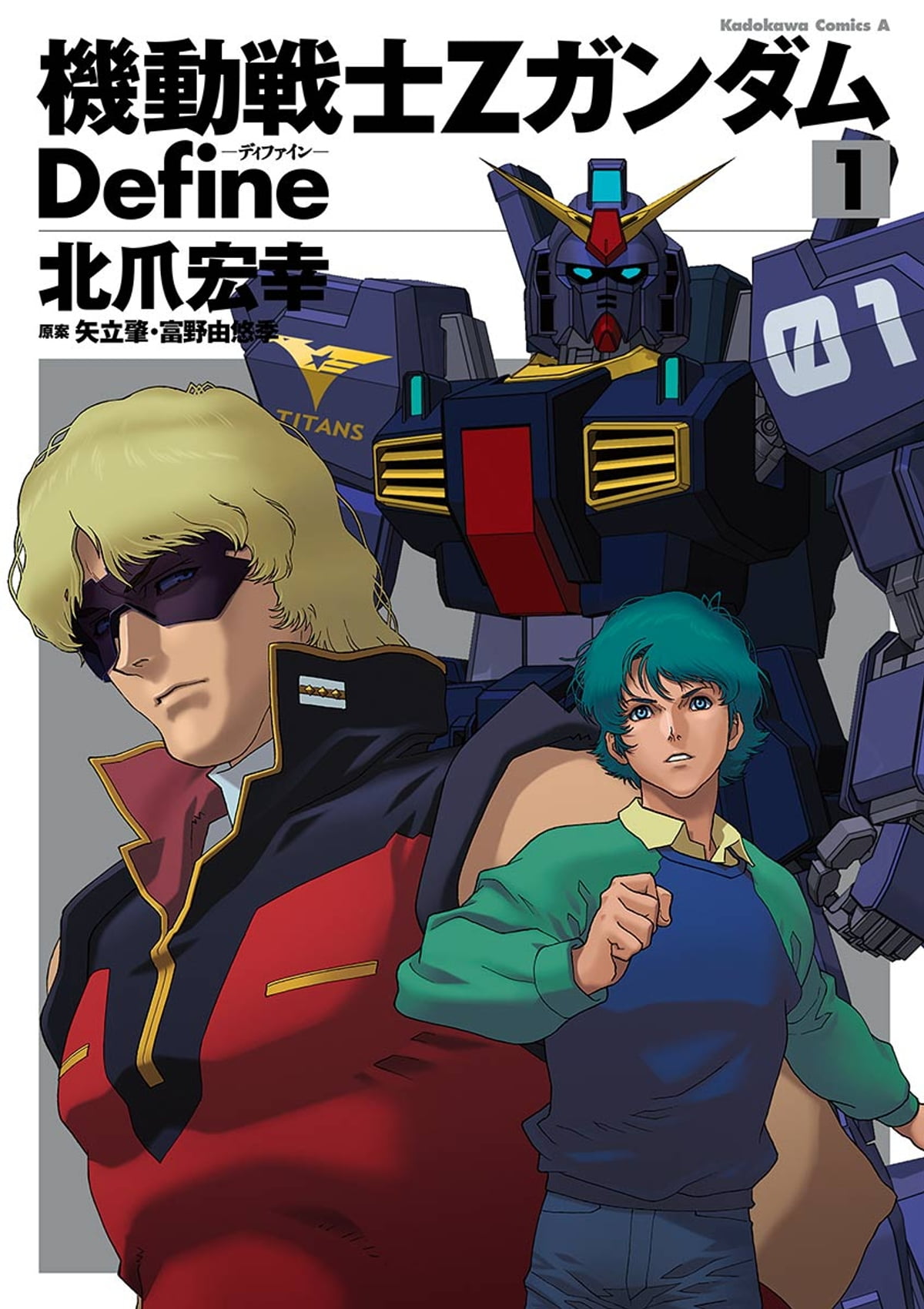
Kitazume would keep working on manga with "Mobile Suit Zeta Gundam: Define", which is to Zeta as Origin is to "Mobile Suit Gundam", only Zeta Define is not a total replacement for Zeta like Origin is for it's respective series. It is a manga retelling of Zeta that makes some creative and story changes, and as the world's biggest Zeta fan I can tell you that this manga is incredible. He works on it with Kenichi Matsuzaki overseeing and editing it. Matsuzaki was a script writer on  "Mobile Suit Gundam", "Space Runaway Ideon", "Macross" and the 1980s "Astroboy/Mighty Atom" anime series. Him being here assures less weirder things happening than there were in Char's Deleted affair and some more quality control and editing, as well as a new creative helping to bounce around ideas. Though there is a few issues. Yes, Kitazume's style doesn't translate to manga the best, leaving his illustrations to look like anime screenshots with flat textures, but it is really good. As of writing this it is still going, having surpassed Origin in number of years it has been running. As of posting this it is about 2/3 way through the show's story. A part of that is because so many episodes were important to Zeta that there isn't much excess to trim like there was with "Mobile Suit Gundam". It is not an actual sequel to Origin, but you can read both Zeta Define and Char's Deleted Affair right after Origin just like that with no issue, same thing if you want to squeeze in 0083 Rebellion as well. While we have nothing for ZZ and probably never will get anything for it, there is something for "Char's Counterattack". While making the movie tying up all the loose ends and arcs in the original Gundam saga, Tomino's script was rejected and he had to rework it, leading to his script becoming the novel "Char's Counterattack Beltorchika's Children", which has also had a manga adaptation. This adaptation is great and really brings the novel to life in a more accessible form, another very recommended read.

Cover art to Zeta Define volume 1 drawn by Hiroyuki Kitazume


So maybe you don't want to read, be it a lack of interest or the TikTok Youtube Shorts brain rot destroying your attention span. Yasuhiko was asked by Sunrise to adapt Origin, to which he directed a 4 episode OVA series focused flashback stuff. It is absolutely incredible and is peak Gundam. Yasuhiko made a follow up film adapting the episode "Cucuruz Doan's Island" into an anime film with the team behind the Origin, intent on remaking that episode as a movie. The episode was removed from releases and airing by Tomino because he felt it showed the production of Mobile Suit Gundam at its worst, making it a sort of lost episode. People grew attached to it, and thought the idea of Amuro befriending and respecting a Zeon soldier who saw the horrors of war first hand was great. The movie is incredible and a great watch. If you want you could probably just watch Origin's OVA, the first "Mobile Suit Gundam" compilation film, the Doan's Island movie and then the last two "Mobile Suit Gundam compilation films, and just go chronologically from there. It works so long as you can overlook Slegger being the Whitebase crew in Doan's Island when he wouldn't have been with the crew by that point in the canon timeline. 

So let's pump the breaks and stop for a second. Maybe this is all too big an ask for you, and that is understandable. So what if you don't want to dedicate so much time to Gundam before you even figure out if you're truly interested? Well this is where things get really open ended. Watching the entire universal century is a huge undertaking, especially counting F91 and Victory, and especially more so if you check out most of the side mangas and stuff. So let me tell you a more manageable approach, and the one Sunrise and Bandai themselves want you to take. So starting in 1994 Bandai has hard rebooted Gundam with every new series. (with the exception of Seed Destiny) Tomino himself has even continued this trend when he returned to the series with Turn A and Reconguista in G, the latter being after the Universal Century (or after Turn A depending on who you ask) and Turn A giving an in universe explanation for all of these stand alone shows and timelines placing everything o one timeline. The first of these standalone hard reboots: "Mobile Fighter G Gundam" is a bit divisive, with a lot of that being the show is a more absurd self serious super robot anime, in comparison to Gundam everywhere else being exclusively real robot. The show is basically Gundam meets Dragonball, and that is no exaggeration. From there we ended up getting many new standalone shows. If you want to just watch one of these I just recommend looking into them and picking whichever one seems interesting to you, be it the plot, look, word of mouth, etc. Maybe you want to watch Witch From Mercury because of the positive word of mouth and being the most popular Gundam series since Seed, (or because lesbians) go nuts. Though if you're still interested in the Universal Century or you don't have a lot of free time and want a smaller thing that is less of a commitment, than you're still in luck. There are many stand alone stories that you are more then welcome to experience, with the various OVAs. "War in the Pocket" is a cool 6 episode OVA about a kid who befriends a Zeon soldier sent on a suicide mission. "08th MS Team" is a great 12 episode standalone series about a team of Federation soldiers working in the jungle during the war from Mobile Suit Gundam, and it has a great compilation film adding an all new character to serve as a clever framing device, and making it a perfect companion piece to that series. Unicorn for some weird reason is something that seems to be a magnet to newcomers to this franchise, and to its credit, it is great, putting a capstone on the Zeon vs Federation thing. Gundam Thunderbolt is an awesome 8 episode OVA adapting of the first six volumes of one of the franchise's best mangas, and bringing us one of the most gripping and morally grey stories in the entire franchise. I already mentioned Stardust Memory. So many options to choose how you want to experience this franchise.


You may notice most of the artwork I shared didn't predominantly feature cool robots in action poses or anything like that. That's because despite being the key factor in the billion dollar Gundam model kit business that has has kept this franchise going since the beginning, they aren't what Gundam is about. Ultimately Gundam is a show about its characters and its commentaries and messages first, and about whatever mecha stuff second. If you come in purely for cool robot and mecha action, there is plenty to go around, but you may be disappointed and In the end though, you can just disregard this. This is just my answer to a question I've been asked a few times. You can approach the franchise however you want or just forget this entire thing completely, it doesn't matter. Though if this franchise strikes a cord with you, than you're in for one incredible ride if you want to whole heartedly tackle this franchise, one so near and dear to my heart, and one I will ever stop professing my love of.

If you have any follow up questions feel free to reach out to me with the contact information provided in the blog's first post. Have a great rest of your day.


Saturday, May 6, 2023

My Breakdown of the End of Gundam's Universal Century part 5: Gundam Reconguista in G series review, classic Gundam reimagined in a weird way for new and younger viewers. Reguild Century

Gundam is a series that has more fans than you think, and like any franchise it's impossible to please everyone in the fanbase. Gundam Seed had ushered in a new era of Gundam and roped in tons of new fans. Gundam 00 carefully tackled subject matter that appeal to a wide demographic of people, especially younger viewers and western viewers, and it is seen as one of the best latter day Gundam shows. However when Gundam Age, a series made in collaboration with Level 5 games, underperformed it kind of left everyone at Ban-Dai and Sunrise scratching their heads. It wasn't until they took a chance and adapted the Gundam Unicorn light novel series that they had struck gold again and found something that pleased most of the fanbase, leading to surge in content taking place in the Universal Century that we are still seeing the effects of to this day. This opened the floodgates for the topic of today's article: "Gundam Reconguista in G".

Series creator Yoshiyuki Tomino had claimed during Gundam Seed's airing in the early 2000s that kids and young audiences probably will have a hard time relating to the Gundam shows of old because they never had to grow up in a traumatic post war era or during the cold war. They would have a hard time relating to those characters and their struggles as well as viewers from that time period could. He then said Gundam was best left in the hands of younger people who could tell new and fresh stories for generations to come. That was the end of it, and everybody understood because the franchise was kind of like his poison and he had just given it proper closure. However all of that was thrown out the window when he had began writing a new sci-fi novel. Whether or not this novel was originally intended to be its own thing or a Gundam related work is unknown, but we know that it evolved into a Gundam series over time. Around the late 2000s he canned this novel and approached Kenichi Yoshida (famous for his work on "Overman King Gainer" and "Eureka Seven") to start creating character designs. Tomino went to Gundam Ace magazine to talk about the scrapped novel and that seemed like the end of it. However in the early 2010s Tomino had pitched an anime based on his scrapped novel to Sunrise, and surprisingly they said yes, and they gave Tomino the green light to go make what he intended to be his final Gundam series, and one made in celebration of the 35th anniversary of the franchise. With Tomino directing and serving as the creative mind behind the series, as well as Kenichi Yoshida serving as character designer and being in charge of animation, we were in for a promising series. The series was named "Gundam Reconguista in G" using the Portuguese word "reconquista" meaning to conquer something again. Tomino wanted a hard G sound (because Gundam) and put a G in there to give it the title. As always I am going to be as spoiler free as possible, with my plot synopsis only spoiling the basic story set up in the first few episodes.


It is Reguild Century 1014, this century has replaced the Universal Century, as the Reguild Century is an era of peace where the technology of the Universal Century is left behind in favor of establishing world peace free from the chains of conflict that plagued the Universal Century. Everything from the Universal Century is nothing more than history, with space colonies no longer being a thing as well. The peace is maintained by a taboo placed on the advancement of weapons and Universal Century related technology, which all countries uphold. One boy Bellri Zenam is training to be a soldier in the capital guard, the defense force of the Capital Territory. This country is important as the special photon batteries that serve as humanity's clean source of energy are outsourced from a special elevator that reaches from the moon to the capital territory. However during a training exercise Bellri encounters a new Gundam unit known as The G-Self and a mysterious girl he feels some connection to. With the emergence of this new Gundam unit comes accusations between nations of the taboo being broken, and Bellri resolves to find where this Gundam came from so he can stop a new war from breaking out and to help this mysterious girl he feels a connection to.


So that's the general story. There is a lot of people including Tomino himself who states the series takes place after Turn A, but a lot of the technology and references in the show supports it taking place after the UC instead, and the status of things on the moon and regression of moon technology doesn't support this either, and Sunrise themselves also say officially that it takes place after the Universal Century, so for all intents and purposes I will say it takes place after the UC and before Turn A. However I personally agree with Tomino's idea that it is post Turn A, by reasoning of thigns like the Moonlight Butterfly. G Reco was received among the fanbase with a resounding "meh" here in the west, and some unfortunate underperformance in Japan despite some level of praise. I don't like to be a contrarian because it's a bad label, but sometimes I just feel like I am when it comes to this franchise. Either that or I am a some obsessive fan who will take whatever this franchise presents me with in stride. When I like something I can look past the flaws and see something wonderful, I feel like this allows me a better understanding of whatever piece of media I am consuming in some ways. I feel this way towards G Reco, but I've also done a lot of digging into the series and its production. First I'm going to do my usual defense of the series and critiques, both with minimal spoilers and one where I talk about more spoilery critiques, than go into what I love about it and all that good stuff. Still you may skip the next four paragraphs if you wish to remain spoiler free.


The first critique is the writing. I've heard from some people that the dialogue is poorly written. No it isn't, Tomino's way of writing things is just weird, and it has evolved since his original 14 year tenure with the series. If you've kept up with Tomino's post Gundam works and/or have seen his early works you know that he writes in his own distinct style, which is a big reason why all his works stand apart from anything else in the UC. Seriously compare the writing in the second half of Gundam ZZ to the writing in Unicorn and it's night and day. Nothing against Unicorn, but doesn't feel very UC compared to say Zeta because its writing is more direct, especially in the dialogue. And many of Fukui's thought processes behind things in the UC are different from Tomino's. It's just not as smartly or poetically written as Tomino's earlier Gundam stuff. People didn't notice this as much in the earlier Gundam works because those shows had a big legacy to them and were influential, G Reco is more so this weird passion project of Tomino's that he made and it doesn't have the same weight or impact as those shows and more people feel less inclined to look past many things here present in other shows or less inclined to just like it because of that. This is only an issue if you aren't used to Tomino's writing style. Second is the pacing. The show is only 26 episodes and three times it introduces an even bigger threat to center the conflict around. Part of this was Sunrise and Ban-Dai's fault. It wouldn't be a Tomino Gundam project post Gundam ZZ without Studio meddling. It's not known exactly what went on because the show's newer and production related stuff on it was still being done as late as 2022. (I'll get there in a bit) However it appears that the show was in fact cut to 26 episodes, making it the shortest Gundam series to not be a spin off until Witch From Mercury broke this record with 24 episodes. I can't imagine this show fitting a 50 or 50+ episode run like intended, but there are a lot of plot points that are underdeveloped and a lot of characters introduced late in the series that we don't spend enough time with. I will admit that yes, this does make some of the emotional beats not hit as hard as they should. This also means only the two main characters get major development, and most of it is in the middle of the series and some in the second half. The pacing does suffer for this too, because this means the show is always moving forward and stopping to let you get a chance to take everything in only a very small handful of times. This is an issue, but not one that is exactly Tomino's fault. I see people complain that the conflict doesn't feel very high stakes or anything, as it's just a power struggle between a couple factions and Bellri is right in the middle of it. For those people I simply must point out that this is a completely modern and realistic conflict, and it is something not typical in mecha anime, which is what Tomino was going for. He wanted to make a Gundam series that had elements of those classic Gundam shows, but with a modern and understandable conflict at its heart and a resolution younger generations could relate to better. If anything this only makes me like the series more because Tomino was telling a new story to pass on his ideas about Gundam in the hands of the younger generation of fans and creators, all with this new series as his means of doing so. The series was intended to be modern and fresh, but very much so a Gundam series at it's core. Its a show meant for newcomers to the series, with its references to classic Gundam and adherence to the same timeline, but its new setting and style.


People complain that they used this art style used in this show for nostalgia reasons or to look retro, but that's not the case. This art style was just the one Kenichi Yoshida had adopted after his extensive work prior. He was hired on by Tomino because they worked together previously on Tomino's last two mecha projects Turn A Gundam and Overman King Gainer, and Tomino obviously liked working with him. This is something that could be understood with just a bit of research, but oh well. The animation is another thing which is criticized for looking a bit rough, and that ties into the complaint about the art style too. This is because of an after effect used on the animations to mimic the flow and look of hand drawn animation on something animated digitally. Though I understand this is an effect not everyone will like, because it does clash a bit with some of the beautiful looking digital backdrops of the series and some of the sparingly used CG. I see people complain about the mechanical designs, the G-Self's backpacks and the Recten and Recksnow in particular. The Recten is a construction mobile suit because the taboo forbids the creation of new UC type weapons, hence their tools being usable as improvised weapons. The Recksnow is just the same thing but with added armor and weapons. The base design was not meant for combat, and it's not meant to be taken seriously in a real fight because it was not originally built for that purpose. As for the G-Self, its design was meant to be alien and weird. I do think it looks too round and smooth, but I think it's a neat design. The backpacks I don't see the issue with, as the visual clashing with the rest of the design is kind of intentional from a design standpoint. The backpacks are rushed out by a military that doesn't know much about the G-Self, they don't have time to design things to look nice or match it color scheme wise. The purpose of these backpacks is to serve as functional support equipment, all functionality over form.


On to some more spoiler centric complaints. (skip the next two paragraphs if you haven't seen it and wish to remain spoiler free) Bellri joining a group of pirates early into the series and fighting with them instead of his home country is something people say is bad writing, but I kind of just question what makes them think that. Bellri once with them sees the possible threat of some kind of world war breaking out, and they're holding two of his friends hostage, he has no choice early on, but decides to work with them so he can stop whatever coming conflict himself. And it's not like he doesn't try to return home, in one episode him and his friends plot an escape with them stowing away on one of the support craft while Bellri fights. Joining forces with them he still refuses to officially be listed among their ranks despite getting offers for high ranking positions due to his skill with the Gundam. His siding with them is completely believable because it is the only option where he can probably stop this war from breaking out. Next is some gripes I personally have. Next is our studio mandated Char adjacent/Char clone Captain Mask, who is a very blatant Char clone. They give him a canon reason to wear the mask, that being that the mask is a prototype that gives him better vision and spatial awareness in combat, but it's limited to him because he is merely testing it before it can be produced further. Sounds fine, I buy that. They make it super obvious who he is from the moment we first see him in the mask and even more so when we meet some of the characters around him. Yet it treats it like this mystery and the other characters don't know. I actually appreciate this because letting us figure out ourselves early on and making the other characters find out later is a fun narrative tool that makes it interesting to watch other characters figure out his identity. However this character's reason for adopting the captain mask persona is because they are jealous of Bellri being adopted by a privileged family as a child and that with the G-Self he poses too big a threat to the balance of the world and he will become a dictator. He says he came to this conclusion while being friends with Bellri, but this is where I have to voice my own grievances. Nowhere at all in the series before he became captain mask did he show any kind of contempt or jealousy towards Bellri, just occasionally saying that he was lucky or it's a coincidence that so and so thing happened to or worked out for Bellri. The guy was established as one of his closest friends too, and there is nothing even suggesting he has a reason to betray him or that his life has been really hard. They don't build up to or elaborate it on it at all until after, and it kind of doesn't make much sense. Even the audience would probably get confused by this because knowing who he is but not his motivation for the first three quarters of the series, his actions as Captain Mask just doesn't make much sense at all until then, and even then the pay off isn't terribly satisfying beyond a final battle between Bellri and Mask. Mask teams up with the faction that wants to do the titular "Reconquista", but that makes his point about him wanting to stop Bellri because he will become a dictator to be kind of hypocritical, since "operation reconquista" involves taking over Earth as its first step, something a dictator would do. Maybe a full 52 episode version of this series would have built up to this and made it more interesting, but we'll never know. Mask's love interest is initially a member on his crew who was looking for her boyfriend and pieced together he had become Mask while she was working with his crew. She later teams with Bellri and everyone to do a raid on the place where the G-Self was produced and she steals an experimental Gundam unit in the raid. She goes back to Mask, reveals she figured out his identity and then simps for her boyfriend so hard she willingly does whatever detestable stuff Mask wants just because she loves him so much. All this despite the fact that Bellri and the main cast helped her get that experimental Gundam unit, she could very well have died if it wasn't for Bellri and the main cast only a few episodes prior, and yet she'd still be willing to turn a blade to them because Mask said so, all in the same day she went on that whole adventure with the main cast. Part of it is the pacing due to the show being cut in half during production, I know, but the writing of that whole thing to the core is kind of just weird, and makes her kind of unlikable in the final couple episodes, especially when she has been established as a close friend of one of our female leads and a nice character. Again, maybe this would have been handled better if Tomino got to make the series a full 52 episodes, but we'll never know.


Lastly is one thing that really rubbed me the wrong way. Near the end of the series the faction that tried to carry out the titular reconquista is defeated and Bellri uses the G-Self to declare an end to the fighting and he forces everyone to stop, then everything is at peace. Some of the important characters of this faction died only minutes before and the show didn't make it seem like a sad thing, but then they redeem the one who survived off screen and make it seem like a good thing she is now at peace with everything and lives happy. So wait why didn't Bellri stop the fighting before the others needlessly died? Literally minutes before Bellri forced everyone to stop fighting she watched in horror as her best friend was killed, and then minutes later in the epilogue where we see the characters after the events of the series, she is happy at starting her new life. Her best friend dying was completely avoidable and stupid and she is just so calm about the whole thing. Why were they even fighting then if there was no reason to? The resolution overall to the conflict is nice, but it also works in invalidating some of the characters who had died in this final battle and makes it seem like things could have been completely avoidable if they just talked or if Bellri just acted sooner. This is really just me nitpicking, but it doesn't change that it is kind of weird. The execution in particular does not help, and only make this whole thing feel worse. If I watched my best friend die because the person who called an end to the fighting didn't do anything to stop the fighting until after she died than I would be sad and upset, this just seems weird to me and is my biggest gripe with the ending. Rather than leaving me happy and satisfied, I just felt like Bellri was an idiot for not stopping the fighting sooner and I had to watch some characters die unnecessarily. Gundam having the balls to let anyone, even members of the main cast die off is something the series is famous for, so this isn't as big a deal as I am making it. There is a twist involving Bellri and another member of our main cast half way through the series, and it is an interesting twist that adds to their backstories, you probably know what I am talking about if you have seen it. It's a cool twist, but it is also not expanded upon much, nor is it built up to that much. This leaves it not as impactful as the show makes it out to be, and it doesn't have too great an impact in the grand scheme of things. If you cut it out, very little of importance would actually change. They don't elaborate too much on it, even though from what it explained it should have much bigger consequences. It seems like it was going to lead to a separate conflict involving the moon and whoever rules that, and if that was the case it was probably cut at whatever point the show's episode count was probably halved early in production, leaving our only major antagonist from the moon being this lovestruck fleet commander we see in several episodes who is in love with a jerkish ace pilot with a death wish. She is a fun antagonist to watch, but it just feels like her stake in everything is small and unimportant. Her absence for a large part of the last chunk of the series seriously hurts this too. The finale to her arc is supposed to make her seem crazy or like a tragic character we are forced to watch, but it leaves little impact aside from "Is she really? oh... okay then..." Like I said, the whole thing with the moon was seriously cut down so we could fast track our way to our characters meeting the Reconquista faction and better establishing them. If the show was a full 52 episodes, this moon part of the plot would probably be much better fleshed out. Seriously Sunrise puts Tomino on this pedestal and always talks about how amazing he is and all the good he has done the franchise, how it couldn't have been possible without him and how amazing his stories are, etc. However it is really hypocritical when they have gotten in the way of nearly every Tomino Gundam production since Char's Counterattack with studio mandates or meddling and interfering, as well as studio politics of some kind. I can completely understand why Tomino apologized for making this series and saying "I didn't think it would be this bad."


Now for things I like about the show. I love the character designs and how much they don't look like Gundam character designs or mecha anime character designs at all. They look very expressive and pretty stylized and I really like that. They look a bit bouncy and very energetic, which can be seen in many areas of the animation in some scenes. The only designs I'm not huge on are the ones that look like JoJo rejects introduced late into the series. The whole aesthetic overall with this show is very pleasing to the eyes, blending modern animation and mechanical designs with these stylized characters is neat. I love the setting and the look of the world here. It looks stunning and just gorgeous. Any shot where you just see the cities from far away or any shot in space, the locations here are just so neat and good looking. The overall look of this show is something I just love, it has it's own unique visual style and that is one thing I just love about it. The opening theme "Blazing" was written and performed by Japanese pop rock duo Gardenelia, and apparently they submitted it late or there was some kind of issue with the song, but it lead to some issue with the creation of the intro, though I've also heard contradictory statements saying this was with the second intro theme "Futari no Mahou" which was performed by pop singer May J. Regardless of whatever issues I love the OST to this show. "Blazing" is a fun and energetic rocker that really does a good job at getting the viewer hyped, and "Futari no Mahou" while often overlooked is a beautiful adventurous symphonic pop song that represents the spirit of this series very well. The credits theme to this show was once again co-written by Rin Iogi (the "person" who wrote or cowrote a theme song to every Gundam series Tomino ever worked on) and Yugo Kanno, and the entire credits sequence is the most Rin Iogi thing to have ever existed and I mean that in the best way possible. I don't know why but seeing all the characters dance together joyously regardless of nationality and the show's conflict with this credits theme playing is just something that gives me dopamine. The credits theme "G no Senko" performed by Daisuke Hasegawa (most famous for contributing to the JoJo's Bizarre Adventure soundtrack) is one of my favorites in the franchise, and that's some stiff competition, as Zeta, Gundam X and Turn A all have songs up there with it. The song is just cheerful in a way that represents the series quite strangely yet well. I just love it. It and the whole credits sequence is a neat thing that shows the more adventurous and less dark tone of the conflict of this series compared to literally every other project Tomino headed in the franchise. The whole series just feels like an adventure. Bellri wants to find the source of the Gundam in hopes of finding the answer to stopping a new war from breaking out, and it's an exciting adventure from location to location as we see very interesting places that we've never seen in Gundam. The whole blending tonally and stylistically of old and new is a fun thing too. This show in so many ways really carries Tomino's idea that Gundam is a series passed down generationally and needs to thrive in the hands of younger audiences and creators as it the franchise gets older, all while serving as a neat capstone to his time with the franchise. A lot of these action sequences are really cool, it's always fun seeing what backpack the G-Self is going to use next and how it will be used in combat. I love how energetic and expressive these character designs are. They just look so expressive and unique compared to a lot of designs found in other works in this franchise probably more expressive than the characters in any series made after Turn A Gundam. This all plays into what I said before about this show's unique visual identity being one of my favorite things about it. I love the overall presentation of this show, it's really well done considering a lot of this show's faults and shows the strength of Tomino as a director quite well. The fights and action scenes are mostly really good. The different back packs on the G Self make for interesting fights and the unique designs are all really fun to see in action. I like the characters, they develop our main cast well enough and I understand a lot of the my problems with the lack of development for some and for most of our supporting cast is due to the show being cut half early in production. The UC references while small really reward people who watched previous UC shows. For example there is one character in Victory Gundam who heroically sacrificed himself in a suicide charge with his battleship, and we never know his real name, as he used a code name throughout the entire series, but he says if his sacrifice helps The League Militaire win he will adopt his code name as his real name and that it will live on forever as the name of a legend. In Reconguista in G there is a mobile suit with the same name as his codename. That is such a small detail that I just love and only hardcore Gundam fans or people who love Victory Gundam would get it. It helps show Tomino really did know what he was doing when he made this show.


Now onto the next thing. The second article I ever posted on this blog was my article explaining things I liked and disliked about Zeta Gundam's compilation films. If you haven't read that article, please don't it is a mediocre unresearched slander piece with me just finding excuses to hate on something I passionately dislike. The gist of it is that to celebrate the 25th anniversary of the franchise Sunrise hired Tomino to comeback and compile Gundam Zeta into 3 films that not only make it more self contained, but add new animation to scenes he wanted changed and remastering old animation. They only remastered roughly 20 or 30 percent of the animation and they butchered the story of the series, making it kind of crappy and ruining a masterful series. They announced back in the mid to late 2010s they would be reanimating the final episode of Reconguista in G and later near the end of 2018 he announced a Reconguista in G film project. This would compile the series into 5 films with some newly animated sequences. They were released starting in 2019, and finished releasing in august 2022. Most of the pictures you've been looking at while reading this article are actually key visuals from the posters to these movies. I've seen them and I can tell you that it is an interesting way to watch the series. I wouldn't say it is better, not by a longshot, but it streamlines the series into a much more concise viewing experience and fixes some of the complaints people had with it. The new stuff is not as noticeable as you'd think except in the final couple films. No, none of my issues with the ending are fixed, the story is more or less the exact same, but with many mistakes and poor writing decisions kind of smoothed over. I guess if you liked the series this could be a fun companion piece to watch after or maybe wait a bit and then rewatch it like this? The movies seem kind of pointless actually, since the show was already pretty short and briskly paced, the most these movies do is cut out a lot of the stuff that are clear symptoms of this series being cut in half during production, so maybe that was the point? I'd say they're a better way to watch it, albeit less complete. If anything though these movies are validated for at least one thing. Once they realized they were exhausting the original series' soundtrack Tomino realized they needed a new song, and one of the people working on it saw the poster to the second film and said "doesn't it remind you of Dreams Come True?" or something to that effect, and Tomino reached out to their producer and songwriter Masato Nakamura, who had interviewed Tomino a decade prior on his radio show. Nakamura agreed to take a break from their 30th anniversary tour to do a soundtrack single.. For those of you who don't know, Dreams Come True is a very famous and popular J pop band most well known for doing the soundtrack to "Sonic the Hedgehog" and "Sonic the Hedgehog 2" on the Sega Genesis. That's right the people who did the Green Hill Zone music did the theme for the second and third Reconguista in G compilation films.


Their song "G" is a very fun and sleek J pop song with an electronic sound that makes it sound modern yet kind of futuristic. It is great and one of the best Gundam themes done in recent memory. Nakamura had said despite never having watched Gundam back in the day, it was so omni present in culture back in the day that ever since its premier in 1979 he has been deeply rooted in the culture surrounding the series because everyone he knew was super into it and he kind of absorbed a bunch of Gundam knowledge through osmosis and knew he had to jump at the chance for Dreams Come True to contribute Japan's biggest anime franchise when the opportunity presented itself. Absolute legend, and the song contributed was great. It doesn't stop there, Daisuke Hasegawa was brought back to sing a new theme for the fourth and fifth films in the series, that like "G no Senko" was written by Rin Iogi and Yugo Kanno. This song "Coloring by G Reco" is much more fast and energetic than the previous song Hasegawa did and it's great too. I don't like it as much, but it is great and keeps up the trend of Reconguista in G having an awesome OST. Kind of sounds like "G no Senko" meets "Soldiers of Sorrow", which I'm 90% sure was intentional, and only makes me like it more.

"Gundam Reconguista in G" is a weird show. It's made for new viewers while carrying over many aspects of classic Gundam and forgoing many others. Tomino really wanted to just make one more series showing younger audiences the appeal of Gundam when previously they may not have been able to relate to classic Gundam. Because of this the show turned off some long time and hardcore fans, as well as a lot of western fans who just didn't get it, and that's fine. Unfortunately though it didn't seem to be all that successful in attracting new viewers. The series isn't perfect and it isn't trying to be. Tomino had a set mission when he made this series and I think he accomplished it decently well. Yes it has its short comings, you'll notice I had quite a lot to say about my own issues with it, but still I really enjoy the series despite its flaws. The style, the action scenes, the soundtrack, so many things here just work even with many things holding it back. I wouldn't say it is the most beginner friendly entry into the franchise nor is it one of the best, Tomino's story telling is on display doing a lot of good, but also on full display at some of its worst too. If you want to check it out go ahead, just go in with the mindset that it is different if you are watching it as your first series or that it is not going to be like classic Gundam if you are one of those people who just love classic Gundam. I will always be ready to go up to bat for this series. I for one love this show and it's unique visuals, and think that regardless of flaws it is a misunderstood series that deserves a lot of respect. It gets a 7.5/10 and ranks probably as my fifth or sixth favorite Gundam series.


TM Network 2024 an end of year retrospective.

I originally held off on doing this, because 2024 just wasn't a very interesting year for the band, but I eventually relented, deciding ...